


choosing your subjects
Why study English Literature?
English Literature involves the study of plays, poetry, and novels that are significant in helping us understand the world around us. The texts explored within this subject have been shaped by events that changed the world, allowing students to consider the impact of these events on society today. Students are encouraged to develop their own thoughtful perspectives on the ‘big ideas’ presented in literature, fostering an understanding of how historical and cultural shifts have influenced the society in which we live.
Through this course, students will be fully engaged in exploring and understanding different viewpoints by examining narratives and characters. This approach allows them to analyse interpersonal relationships across various cultural contexts and supports the development of empathy skills.
Studying English Literature also promotes the growth of key skills in reading, writing, and critical thinking. Students have the opportunity to broaden their cultural awareness and gain a deeper appreciation for the finest works in literary history. The course encourages students to read widely for pleasure and provides valuable preparation for further study in literature at a higher level.
Frequently Asked Questions about English literature
Skills and knowledge developed
Throughout the course, students are encouraged to:
- Read a wide range of classic literature fluently and with a strong understanding, making connections across their reading.
- Read in depth, critically, and evaluatively, enabling them to discuss and explain their ideas and interpretations.
- Develop the habit of reading widely and frequently.
- Appreciate the depth and power of the English literary heritage.
- Write accurately, effectively, and analytically about their reading, using standard English.
- Acquire and use a broad vocabulary, including the necessary grammatical, literary, and linguistic terminology to critique and analyse texts.
Texts studied
- Shakespeare: Students will study Macbeth by William Shakespeare.
- The 19th-Century Novel: Students will study A Christmas Carol by Charles Dickens.
- Modern Text: Students will study An Inspector Calls by J. B. Priestley.
- Poetry: Students will study the Power and Conflict cluster from the AQA poetry anthology, Poems Past and Present, which includes 15 thematically linked poems written between 1789 and the present day.
- Unseen Poetry: Students will prepare for the unseen poetry section of the examination by exploring a wide range of poetry, developing their ability to closely analyse poems they have not previously studied. They will learn to examine and compare features such as content, theme, structure, and use of language.
Assessment Objectives
The course covers the following assessment objectives:
- AO1: Read, understand, and respond to texts. Students should be able to maintain a critical style, develop an informed personal response, and use textual references, including quotations, to support and illustrate their interpretations.
- AO2: Analyse the language, form, and structure used by writers to create meaning and effect, employing relevant subject terminology where appropriate.
- AO3: Show understanding of the relationships between texts and the contexts in which they were written.
- AO4: Use a range of vocabulary and sentence structures for clarity, purpose, and effect, with accurate spelling and punctuation.
Assessment
Paper 1: Shakespeare and the 19th-Century Novel
- How it’s assessed: Written exam lasting 1 hour and 45 minutes, worth 64 marks and accounting for 40% of the GCSE.
- Questions:
- Section A – Shakespeare: Students will answer one question on the play, which involves writing in detail about an extract and then discussing the play as a whole.
- Section B – The 19th-century novel: Students will answer one question on the novel, requiring detailed analysis of an extract and discussion of the novel as a whole.
Paper 1: Modern Texts and Poetry
- How it’s assessed: Written exam lasting 2 hours and 15 minutes, worth 96 marks and accounting for 60% of the GCSE.
- Questions:
- Section A – Modern texts: Students will answer one essay question from a choice of two on the modern text studied.
- Section B – Poetry: Students will answer one comparative question on one named poem (printed on the paper) and another poem from the anthology cluster.
- Section C – Unseen poetry: Students will answer one question on an unseen poem and another question comparing this poem with a second unseen poem.
What course will I follow?
Students will follow the GCSE English Literature (8702) course offered by AQA.
What equipment will I need?
No specialist equipment is required apart from standard writing materials. The Academy may recommend a study guide or workbook to support students’ learning.
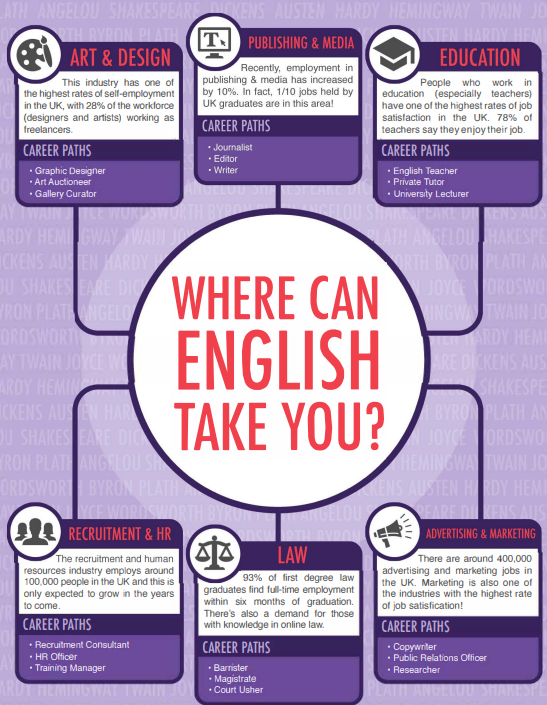
Where Can GCSE English Literature Lead To?
How Can I Support My Child with English at Home?
The most effective way to support your child with their English course is to encourage them to read widely and regularly. Engaging with a variety of fiction and non-fiction texts, such as newspapers, articles, blogs, and playing word games, will help to enhance their vocabulary, reading fluency, and spelling accuracy. Discussing what your child is reading or even reading the same text together can provide valuable opportunities for conversation and deeper understanding. Becoming a member of a local library, or encouraging your child to use the school library or MyOn to access a broad range of texts, is a simple yet effective way to support their progress in English.
